
Fitness isn’t just for the young—it’s a lifelong journey that helps you age gracefully. Fitness for aging means staying active to boost mobility, strength, and mental health at any stage of life. Whether you’re in your 40s or 80s, the right approach keeps you vibrant and independent. Here’s how to embrace fitness for a healthier, happier life as you age.
- Stay Active with Age: Regular exercise enhances mobility, heart health, and mental clarity, countering age-related decline. It improves joint function, reduces fall risk, and boosts mood. From brisk walks to strength training, staying active helps you maintain independence and enjoy daily activities, whether it’s gardening or playing with grandkids.
- Low-Impact Options: High-impact exercises can stress aging joints, so opt for low-impact activities like swimming, tai chi, or walking. Swimming builds endurance without straining knees, while tai chi improves balance and flexibility. Aim for 30 minutes most days—try a morning walk or an evening water aerobics class to keep movement gentle yet effective.
- Strength Matters: Resistance training is crucial for fitness for aging. It combats muscle loss (sarcopenia) and strengthens bones, reducing osteoporosis risk. Use light dumbbells, resistance bands, or bodyweight exercises like chair squats. Two sessions weekly targeting legs, back, and core can maintain strength and support daily tasks like carrying groceries.
- Stay Consistent: Consistency is key, even if workouts are short. Aim for 3–4 sessions weekly, mixing low-impact cardio and strength exercises. A 15-minute walk or a 20-minute strength circuit counts. Schedule sessions like appointments to build a routine. Consistency in fitness for aging builds resilience and keeps you moving with ease.
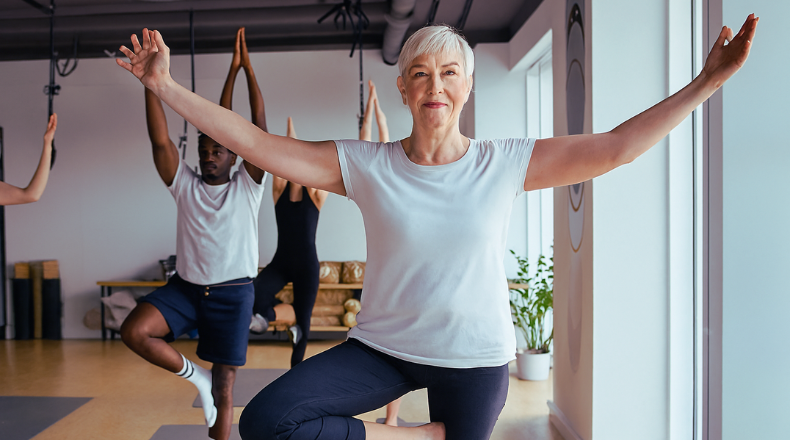
- Balance and Flexibility: Falls are a major concern as we age, so prioritize balance and flexibility. Yoga or simple balance exercises, like standing on one leg, improve stability. Stretching daily—try touching your toes or shoulder rolls—keeps joints limber. These practices enhance coordination and reduce injury risk, supporting long-term mobility.
- Nutrition Support: A nutrient-rich diet fuels fitness for aging. Focus on protein (chicken, eggs, or beans) to preserve muscle—aim for 20–30 grams per meal. Calcium-rich foods like yogurt or leafy greens support bone health. Pair with colorful veggies and whole grains for energy and vitality. Stay hydrated with 8 glasses of water daily.
- Mental Benefits: Exercise boosts cognitive function and mood, reducing the risk of depression or cognitive decline. Activities like dancing or group fitness classes stimulate the brain while fostering social connections. Even a short walk in nature can lift spirits and sharpen focus, making fitness a mental health win.
- Consult Experts: Work with a trainer or doctor to design a safe, age-appropriate plan. They can recommend exercises tailored to your needs, like modifications for arthritis or balance issues. A physical therapist can address specific concerns, ensuring fitness for aging is both effective and safe.
Fitness for aging empowers you to live fully at every stage. Start with low-impact moves, stay consistent, and fuel your body right. With these tips, you’ll age with strength, confidence, and joy.